

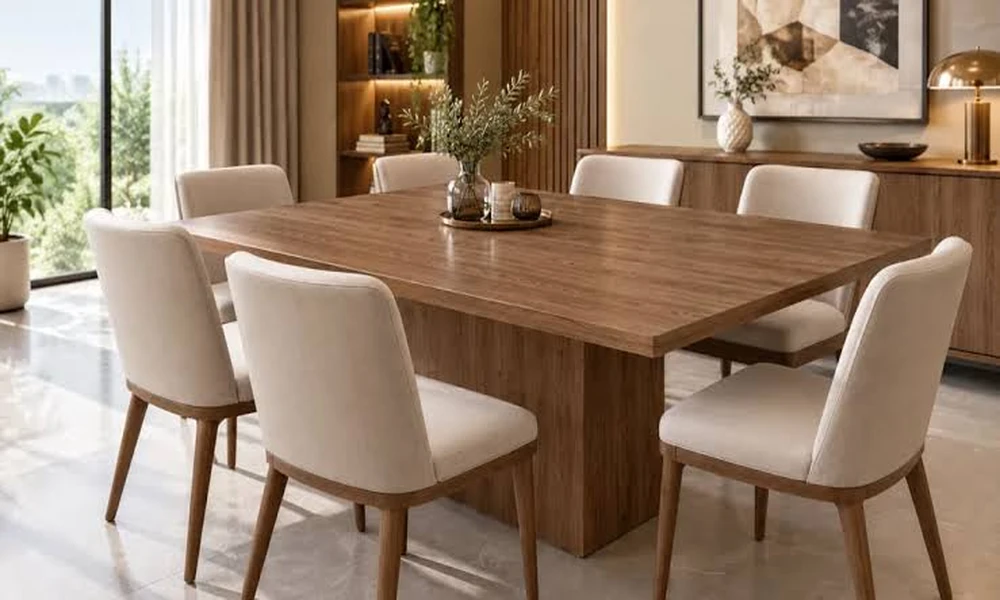
The dining table is perhaps the most popular surface in the home. It is used for serving daily meals and festive occasions and, therefore, has to withstand the effects of food, utensils, spills, and cleaning actions. While the outward appearance of the table matters, it is also important to consider the surface material, as it affects surface maintenance and durability.
A food-grade laminate tabletop may be an option to consider when thinking of furnishing a dining area that should be comfortable and stylish at the same time. However, one must keep in mind that there is a difference between a decorative laminate for furniture pieces and that which has been specifically manufactured for direct food contact. The purpose of use and respective specifications of the product should help you choose between these options.
What Makes a Dining Table Surface Hygienic?
Dining tables need regular cleaning, but hygienic characteristics depend on more than just how easy it is to clean. The type of finish, whether the surface has cracks and chips, and what cleaning products have been used make a difference.
A well-finished laminate will allow eating meals without worrying too much over the spills of food. A finished laminate surface does not need polishing and sealing the way an unfinished wood surface needs.
However, even a decorative laminate should not be considered food-safe just because it is easy to clean. Where food will actually touch the table, check if the whole surface system passes the appropriate food-contact standards. Things to bear in mind include laminate, adhesive, substrate and edge finish.
Understanding Antibacterial Properties and Food Safety
An antibacterial laminate sheet can be a sheet that has undergone a treatment to stop bacteria from growing. Such properties can be important in settings where cleanliness is a pivotal element, but how effective an individual product is will
The finish you pick can determine the overall character of your table and how easy it is to see smudges and fingerprints. Matte finishes give a certain simplicity in looks, while glossy finishes make the table very shiny. If the table has a wood finish, it can bring warmth to both classical and modern dining rooms, and stone-like finishes can be appropriate for minimalist spaces.
In this regard, it would be reasonable to think about having stain-resistant laminate dining surfaces in your dining area if spills of sauces, drinks, and food are too common for you. However, it is important to remember that different laminate surfaces feature various stain-resistant qualities, and it is not wise to presume that all decorative surfaces will resist all types of spills, dirt, etc. In order to be sure you understand how to clean spills, it is advisable to check the information from the manufacturer.
Besides, colors are equally important. Medium wood tones with texture can help hide light stains that appear in everyday life, while a very dark table and a highly polished top may make it easy to see dust and fingerprints on the table. Therefore, it is important to think of the way your family members are going to use the table in order to select a practical finish.
Points to Consider While Choosing a Suitable Dining Table Laminate
The tabletop is not the only part of the whole constructed dining surface. Edge finishing, quality of the substrate,as well as installation, influence the longevity of use and ease of cleaning.
Good edge finishing prevents dirt and mud from getting there. The substrate should be good for the type of furniture the dining table is going to be used for, and the joint should be created in accordance with the requirements from the manufacturer.
Let’s consider the practical points that have to be taken into account while choosing a laminate for your dining table surface:
- Cleaning: Ensure that you know which cleaning agent is appropriate for the table surface.
- Scratch resistance: Do not think that all types of laminate have the same protective qualities.
- Edging: Be sure that the edges and joints of the table are well-finished.
- Food-contact acceptance: Ensure that the decorative laminate is good for food.
- Installation: Be sure to choose other materials appropriately as well as follow the recommendations of the manufacturer in terms of installation.
To obtain the necessary design ideas, the decorative laminate collections from Royale Touche feature various colors and textures that can be suited for dining room furniture.
Conclusion
The surface of the table should determine the way people use the table, serve food and keep furniture in good condition. The products of decorative laminates are designed to have beautiful surfaces and be easy to clean, while antibacterial properties need to be proven by the necessary documents.
