

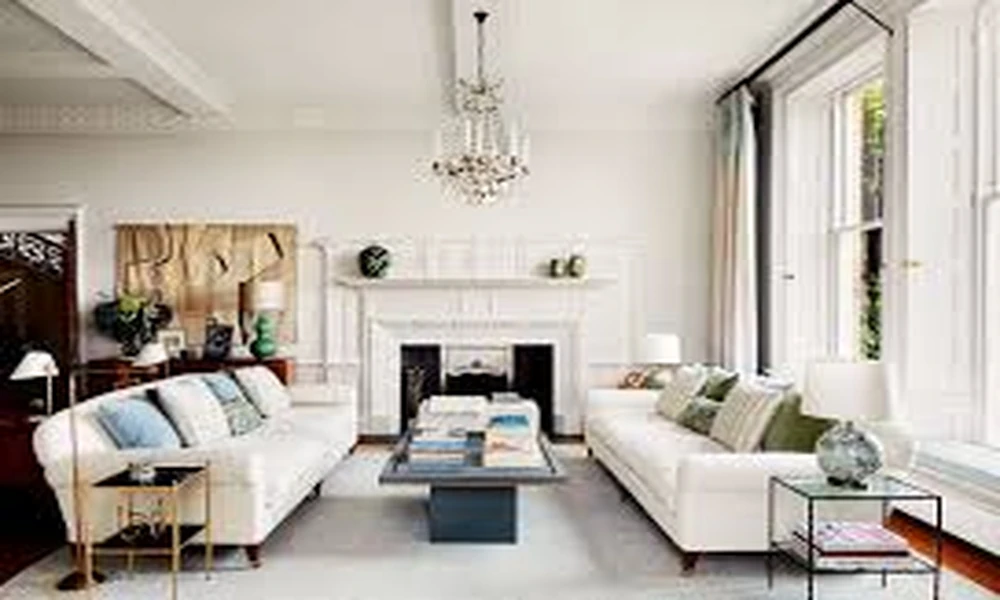
Surrey’s commuter towns grew with the railways, which is why Guildford, Woking and Epsom hold such a deep stock of Victorian terraces and Edwardian semis, built for families catching the morning train to Waterloo a century before anyone called it commuting. These houses arrive with their decorating instructions built in. Each original feature suggests its own treatment, so rather than imposing a scheme on the house, read the features and let the architecture lead.
The Picture Rail: Your Most Useful Line
That timber rail running 30 to 50 centimetres below the cornice is a decorating tool, not an obstacle. The classic move paints the wall colour up to the rail and a lighter ceiling shade above it, which visually lowers lofty Victorian ceilings and makes tall rooms feel settled. The current alternative, colour drenching, runs one colour across walls, rail, and the band above, straight over the cornice and sometimes the ceiling too, wrapping the room in a single deep shade. Drenching suits, moody studies and dining rooms; the two-tone approach suits bright Edwardian living rooms. Either way, never rip the rail out. Buyers in these towns pay for original detail.
Cornices And Ceiling Roses: Less Paint, More Care
A century of repainting clogs plaster detail until acanthus leaves read as porridge. Before decorating, have heavily painted cornices gently stripped or at least carefully cut in with thinned coats, because crisp plasterwork transforms a ceiling more than any colour can. Picking out the rose or cornice in a soft contrast, stone against white, works beautifully in hallways. Thick, hurried coats are the one genuine act of vandalism available to a decorator in these houses.
Walls That Need To Breathe
The technical point that outranks every aesthetic one. Most pre-1919 houses in these streets have solid brick walls finished in lime plaster, built to absorb and release moisture. Seal them under modern vinyl emulsions and moisture gets trapped, feeding the blistering and damp patches so common in period hallways. Specify breathable paints, clay, mineral or designated heritage emulsions on original plaster, and the walls manage themselves the way they did in 1895. This single specification decision separates decorators who know period property from those who merely like it.
Sash Windows And Joinery: The Frame Deserves A Colour
Brilliant white plastic-look paint flattens a period room. Edwardian joinery sings in off-whites with a drop of grey or green in them, while Victorian sashes carry darker frames superbly: ink, bronze green, aubergine, framing the garden like a picture. Outside, heritage front door colours, deep greens, oxblood, navy with brass furniture, suit the conservation streets around Guildford’s St Catherine’s or Epsom’s college area, where several roads sit under conservation rules worth checking before exterior changes.
Hallway Floors And The Dado: Embrace The Original Logic
Victorian builders fitted encaustic tiled paths and dado rails in hallways for hard practical reasons: wet coats, muddy boots, narrow circulation. Keep that logic. Restore the geometric tiles rather than covering them, run a deeper, tougher colour below the dado and something lighter above, and the narrow Victorian hall stops fighting its proportions. Where the rail vanished decades ago, reinstating one costs little and re-anchors the whole space.
Bringing It Together
The houses of these three towns reward decoration that takes their side. Heritage colour ranges from the established British makers, who were drawn from exactly this era of building, and experienced painters and decorators in Surrey will know both the palettes and the breathability rules these properties demand. Decorate with the house rather than against it, and a 120-year-old semi in Woking will look better than anything built since.
