

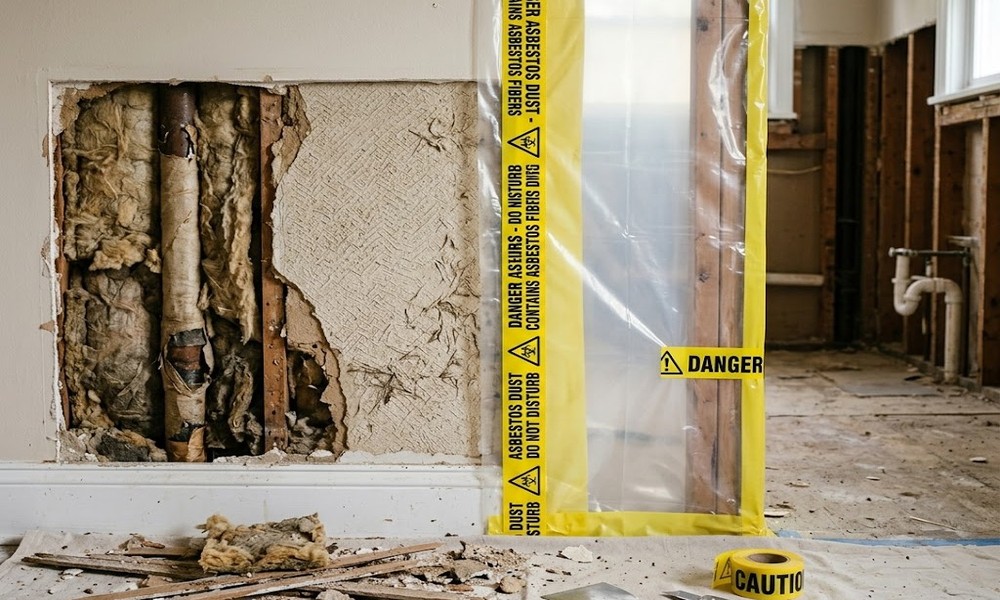
Before starting any home renovation-especially in older properties-it’s important to understand the potential presence of asbestos. Commonly used in building materials before the 1980s, asbestos can pose serious health risks when disturbed. Knowing how to identify it and handle it safely is essential for protecting your household during renovations.
What Is Asbestos and Why Is It Dangerous?
Asbestos is a naturally occurring mineral once valued for its heat resistance, durability, and insulating properties. It was widely used in insulation, flooring, ceiling tiles, roofing materials, and pipe coverings. However, when asbestos-containing materials are damaged or disturbed, they can release microscopic fibers into the air. Inhalation of these fibers is linked to serious illnesses, including asbestosis, lung cancer, and mesothelioma.
Where Asbestos Is Commonly Found
In older homes, asbestos may be present in unexpected places. Common areas include vinyl floor tiles, textured ceilings (such as popcorn ceilings), cement siding, attic insulation, and duct insulation. Because asbestos cannot be identified by sight alone, professional testing is required to confirm its presence.
Why Renovations Increase the Risk
Renovation work like demolition, sanding, drilling, or removal of old materials can disturb asbestos fibers. Even minor home improvement projects can create airborne contamination if asbestos-containing materials are present. This is why pre-renovation inspections are critical in older homes.
When You Need Professional Abatement
If asbestos is confirmed, professional abatement is required in most cases, especially when materials are damaged or will be disturbed. Licensed asbestos abatement contractors use specialized containment systems, protective equipment, and HEPA filtration to safely remove or encapsulate hazardous materials while preventing exposure.
What the Abatement Process Looks Like
A typical asbestos abatement process includes inspection and testing, sealing off contaminated areas, safe removal or encapsulation of materials, air filtration, and final clearance testing. These steps ensure the space is safe before renovation work continues.
Safety and Legal Considerations
Improper asbestos removal is not only dangerous but may also violate local and federal regulations. Many regions require certified professionals for handling and disposal, ensuring compliance with strict safety standards.
Final Thought
Before beginning any renovation in an older home, always consider the possibility of asbestos. Proper inspection and professional abatement protect your health, your property, and your investment. Taking the right precautions ensures your renovation project moves forward safely and without hidden risks.
This post was written by a professional at The Hazmat Team. Trust your asbestos abatement contractor serving Orange, Riverside, Los Angeles, and the Inland Empire, including Anaheim mold remediation. The Hazmat Team ensures a safe removal process with confidence and expert care.
