

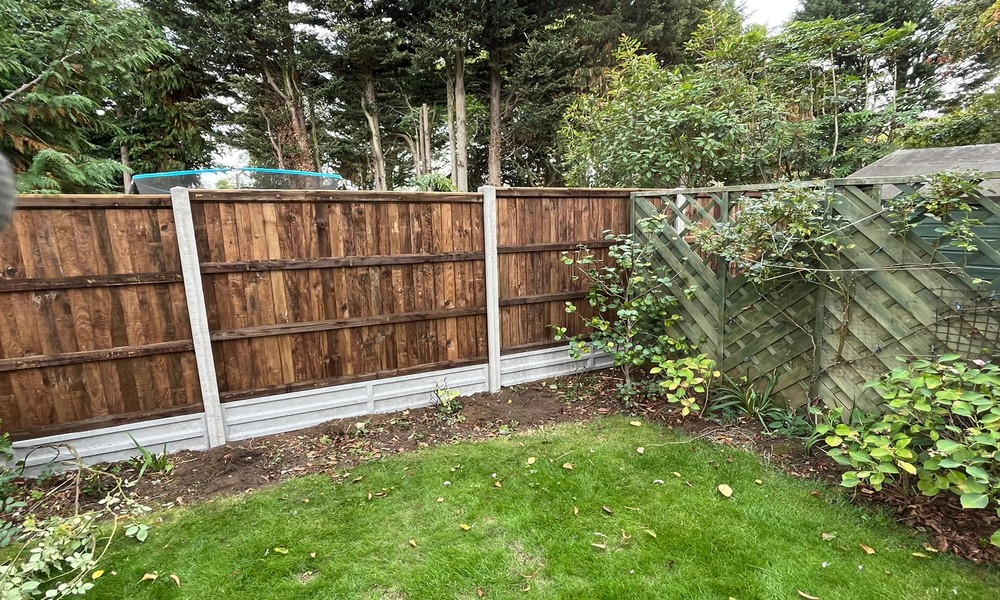
After the winter we’ve just had, plenty of homeowners across Leeds are looking out at gardens that suddenly feel a bit more exposed than they did six months ago.
Panels missing.
Posts leaning.
Whole sections lifted clean out of the ground.
And the strange thing is, many of those fences weren’t even particularly old.
That’s becoming more common now. Over the last few years I’ve noticed more customers searching for fencing companies near me after storms despite having fencing installed fairly recently. Ten years ago you’d expect serious failures from neglected fencing or timber reaching the end of its lifespan. Now I’m seeing structural movement in installations less than a decade old.
A lot of it comes down to how weather patterns have changed.
Not necessarily worse all year round. Just harsher in shorter bursts.
We seem to get longer wet periods followed by strong gusting winds that arrive on already saturated ground. That combination absolutely punishes weak fence installation. Once soil softens properly, even decent-looking fencing can start shifting if the groundwork underneath was rushed.
You can usually tell after one windy night which fences were installed properly and which ones were built to hit a cheap quote.
Wet Ground Causes More Problems Than Wind
Most homeowners blame the wind.
Usually it’s the ground.
One thing I see often on local jobs is panels blown over while the timber itself still looks relatively sound. The real failure point sits underneath. Waterlogged soil loosens the post foundations first. Wind simply finishes the job.
Clay-heavy areas around Leeds are especially rough on fencing during winter because the soil expands when saturated and contracts again during dry periods. That movement slowly weakens concrete around the posts.
Then one storm arrives and the whole run starts moving together.
I worked on a job earlier this year where the customer was convinced the timber quality had failed. In reality, every single post had only been installed around 400mm deep in heavy wet ground. Looked tidy from above. Absolute disaster below ground.
That fence never really stood a chance.
Proper post depth still matters massively. I know that sounds basic, but it’s amazing how often shortcuts happen. Standard domestic fencing should usually sit around 600mm deep minimum in most Leeds gardens, deeper again on exposed sites or sloping land.
Anything shallow becomes vulnerable once the ground softens.
Lightweight Panels Are Struggling In Open Gardens
Another thing changing British fencing is the sheer amount of wind exposure on newer developments.
Older gardens often had mature hedges, trees and layered planting that naturally reduced airflow. Modern estates can feel completely open for years after construction. Fencing takes the full force of crosswinds with almost no protection.
That’s causing problems for lightweight panel systems.
Some lap panels now feel alarmingly flimsy compared to older versions. They look neat enough when first installed but repeated winter storms expose weaknesses quickly. You especially notice it on corner plots where wind catches fencing from multiple angles.
Many homeowners in Leeds ask me why one section failed while another stayed standing.
Usually it comes down to airflow.
Solid decorative fencing might look smart initially but in exposed gardens it can act almost like a sail. Slatted systems sometimes perform better because they allow controlled airflow through the structure rather than resisting it completely.
People don’t always want to hear that.
A lot of modern fencing decisions now come from social media inspiration rather than practical experience. Some designs simply aren’t suited to northern weather conditions unless heavily reinforced.
That reinforcement costs money, which is where problems start.
Cheap Fence Installation Rarely Survives Harsh Winters
This is probably the bluntest truth in the industry.
Cheap fencing quotes nearly always show themselves eventually.
Sometimes within months.
You can hide weak workmanship briefly. You cannot hide it through repeated winters in West Yorkshire. Sooner or later movement appears. Gates start dropping. Panels rattle. Gravel boards sink. Posts loosen.
The fencing industry unfortunately still attracts plenty of rushed installation work because many homeowners understandably focus on visible appearance rather than groundwork.
From the surface, one fence can look very similar to another.
Below ground, they can be completely different.
Proper fence installation takes time. Good contractors spend longer checking drainage, levels, underground conditions and post spacing before the visible work even begins.
And honestly, digging is half the battle in Leeds.
Some gardens are straightforward. Others are brutal. Heavy clay. Buried rubble. Old footings. Tree roots. Builders’ waste from previous developments. Every one of those affects stability long-term.
I’ve had days where removing failed concrete took longer than installing the replacement fencing.
That side of the job rarely gets appreciated until storms expose poor groundwork.
More Homeowners Are Choosing Concrete Posts
There’s definitely been a noticeable increase in demand for concrete systems recently.
Not everyone likes the look of concrete posts and gravel boards, but after repeated storm damage many homeowners simply want durability first.
Fair enough.
Concrete systems generally handle wet conditions far better long-term because the structural elements aren’t sitting vulnerable below soil level like timber posts. Once installed properly, they remove one of the biggest causes of fence failure.
Rot underground.
That said, even concrete systems can fail if installed badly. I’ve seen concrete posts leaning at ridiculous angles because installers used poor footing depth or weak concrete mixes.
Nothing survives poor workmanship forever.
One thing I’ve noticed recently is homeowners becoming far more willing to invest slightly more upfront if it means avoiding repeat repairs later. The cost of replacing fencing entirely now hits hard enough that people increasingly want longevity over quick savings.
That shift has definitely changed buying behaviour.
Fence Repairs Are Becoming More Seasonal
Years ago fencing work stayed relatively steady through the year.
Now weather spikes create huge surges.
The first major winter storm often triggers a flood of calls from people searching for fence repair near me services after panels fail overnight. Then things calm slightly before another storm system arrives and starts the cycle again.
Autumn has become particularly busy because experienced homeowners now realise preventative repairs save money later.
Loose posts, damaged arris rails and early movement are much easier to fix before winter saturation arrives properly. Once ground becomes heavily waterlogged, even small repairs become more awkward and expensive.
One thing I always tell customers is this:
If your fence already moves in mild wind, winter will expose it brutally.
Small warning signs matter.
Common early problems include:
- gates catching slightly
- visible post wobble
- cracked concrete around bases
- panels rattling unevenly
- gravel boards sinking
- water pooling near fence lines
- timber swelling around fixings
Most total fence failures don’t happen without warning. People just tend to ignore the warnings until a storm removes the choice.
Composite Fencing Is Growing For A Reason
Composite fencing has definitely gained traction after repeated storm seasons.
Not because it’s indestructible. It isn’t.
But homeowners are increasingly fed up with replacing warped or rotten timber panels every few years. Composite systems remove many of the moisture problems associated with traditional timber fencing.
Still, there’s a misconception that composite fencing automatically equals zero maintenance and perfect durability.
Not true.
Poor installation causes problems regardless of material. Composite expands differently during temperature changes and needs accurate spacing. I’ve seen expensive systems buckle because installers ignored expansion gaps completely.
That’s why experienced fencing contractors near me searches matter more now. Materials alone won’t solve poor workmanship.
And honestly, some homeowners choose composite for the wrong reasons anyway. Certain modern gardens suit it beautifully. Others lose character completely once everything becomes grey composite boards and aluminium trims.
There’s still something solid and reassuring about well-built timber fencing when it’s done properly.
Britain’s Gardens Are Changing Too
Another reason fencing styles are evolving comes down to how people actually use gardens now.
Gardens became proper living spaces over recent years rather than just somewhere to mow occasionally. Outdoor kitchens, covered seating areas, garden offices and privacy zones all changed what homeowners expect from fencing.
A boundary line now has to do more than simply divide properties.
People want:
- privacy
- noise reduction
- visual design
- wind buffering
- security
- low maintenance
- longer lifespan
Trying to balance all of those things together changes how fencing gets designed.
For example, taller fencing requests have increased massively around Leeds over the last few years, especially in tighter suburban developments where overlooked gardens frustrate homeowners.
But taller fencing also increases wind loading.
That means stronger posts, deeper foundations and smarter spacing become essential. You cannot just scale standard installation methods upwards and hope for the best.
Storms expose that quickly.
Security Concerns Are Influencing Domestic Fencing
Another noticeable trend is homeowners wanting fencing to feel more secure.
Not aggressive-looking. Just solid.
There’s been growing interest in stronger boundary systems, side access protection and fencing that reduces visibility into gardens. Many people now work from home part-time and spend more time noticing security weaknesses around their property.
That’s changed installation priorities.
One thing I’ve seen repeatedly on local jobs is homeowners replacing decorative low fencing with taller systems after experiencing attempted break-ins, vandalism or persistent trespassing through rear ginnels and alleyways.
Good domestic fencing doesn’t need to look industrial to improve security.
Simple changes help massively:
- reduced footholds
- stronger rails
- deeper-set posts
- limited visibility gaps
- reinforced gates
- better fixings
Small details matter.
Especially after storms weaken older structures.
Fence Installation Is Becoming Less DIY-Friendly
Ten or fifteen years ago, more homeowners attempted full fence installation themselves.
Some still do obviously, but modern fencing jobs increasingly involve awkward groundwork, heavier materials and stricter expectations around finish quality.
Honestly, many DIY failures start with underestimating post installation.
Digging proper depth in heavy Yorkshire clay is exhausting work. Add buried rubble, tree roots and poor drainage into the mix and things get difficult quickly.
Then there’s levelling.
One badly aligned post can ruin an entire fence line visually.
I’ve repaired plenty of DIY installations where the panels themselves were actually decent quality but the groundwork underneath simply wasn’t strong enough for long-term movement and winter conditions.
That’s usually when people start searching for fencing contractor near me services after realising the difficult part isn’t attaching the panels. It’s everything underneath.
The Strongest Fences Usually Aren’t The Flashiest
This industry goes through trends constantly.
Right now it’s contemporary slatted systems, dark finishes and ultra-modern layouts. A few years before that everybody wanted decorative wave panels. Before that it was heavy overlap fencing everywhere.
But the strongest fences I still see across Leeds tend to have something in common.
They’re practical first.
Proper post spacing. Decent drainage. Sensible airflow. Strong foundations. Good timber treatment. Nothing overly clever.
Some of the best surviving fencing around West Yorkshire was installed years ago using straightforward featheredge systems with solid concrete posts and gravel boards. No fashionable extras. No showroom gimmicks.
Just experienced installation work done properly.
Storms have a habit of stripping away marketing claims quite quickly.
What survives usually comes down to groundwork, not trends.
